Polk and Dallas counties, Iowa
Septic transfers on the West Des Moines edge
West Des Moines does not sit in one county. It straddles Polk and Dallas counties, and on the septic question that split matters. For homes on the Dallas County side, the Dallas County Environmental Health Department is the administrative authority that enforces state code and permits private septic systems, while the Polk County side runs through Polk County's office. Iowa's time-of-transfer inspection applies on both sides wherever a home is served by a private system rather than city sewer.
The Dallas County side is where the pressure sits. Dallas County has been among the fastest-growing counties in Iowa, and West Des Moines, Waukee, and Adel anchor that expansion. New rooftops on the metro's western edge keep meeting older exurban parcels still on private septic, which concentrates transfer inspections there. The county publishes its private septic information and permitting requirements for exactly those properties.
Two counties, one state rule
The requirement itself does not change at the county line. Iowa's time-of-transfer inspection is state law statewide. What changes is which office administers it: the Dallas County department on the west side, and Polk County on the east, the same office that covers Des Moines and Ankeny. Because the city crosses the line, the first practical step is simply confirming which county your parcel is in, since that decides where your report and any permits go.
What the inspection checks
A certified time-of-transfer inspector opens the tank, documents the tank and drainfield, confirms the system treats waste after the tank, and files a report with the state. A passing report is valid for two years for ownership transfers. The full process and its exemptions sit in the time-of-transfer guide and on the time-of-transfer inspection page.
Inspect early on a growth-ring acreage
On the fast-developing west side, many on-septic homes are older acreages surrounded by new construction. Booking the inspection when you decide to list, rather than once under contract, keeps a failed result from colliding with a buyer's timeline. A passing report stays valid for two years, so there is little cost to knowing early and real cost to finding out at closing.
What does septic work cost near West Des Moines?
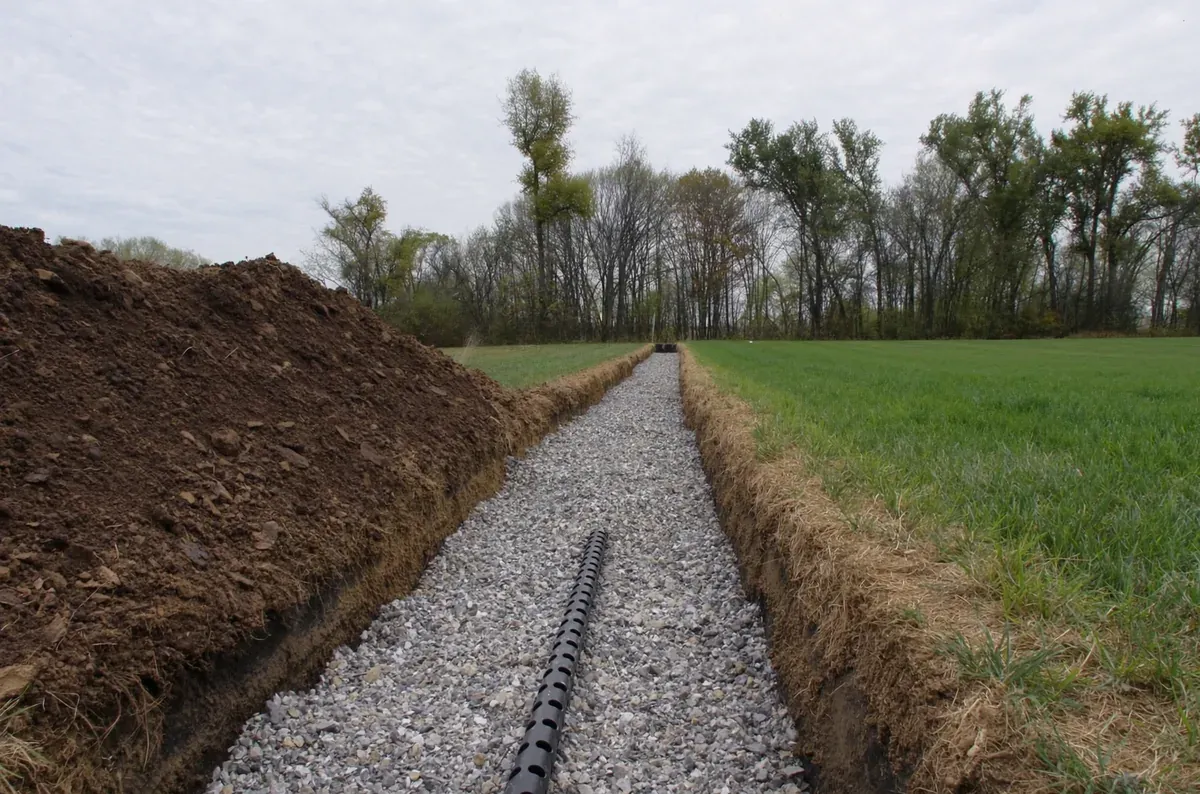
Near West Des Moines, a 1,000-gallon septic tank cleaning is published at about $233 to $274, a new conventional system for a three-bedroom house at $6,282 to $7,464, and a drainfield replacement at roughly $2,500 to $10,000. Those are cost-aggregator estimates, not contractor quotes, and the spread inside each one comes down to tank size, access, soil, and how far the truck drives. The pattern they show is the one that matters: the inspection is the small number, and the repair it can trigger is the large one, which is why finding out early is worth more than any single figure below.
| Work | Typical range | Published by |
|---|---|---|
| Septic tank cleaning, 1,000 gallon | $233 to $274 | ProMatcher (Des Moines) |
| Septic tank pump-out, same job priced higher | $290 to $700 | Manta (Polk County) |
| New conventional system, 3-bedroom | $6,282 to $7,464 | ProMatcher (excludes permits and soil testing) |
| Drainfield replacement | $2,500 to $10,000 | Angi (Iowa band) |
No Iowa contractor publishes a flat price for this work, so treat the table as a budget, then get a real quote on your own system. Where two aggregators price the same job differently, as they do for a pump-out, both are shown rather than the flattering one. The time-of-transfer inspection itself is a few hundred dollars, and we print no range for it because no aggregator we can cite publishes an Iowa inspection price.
What septic services do homeowners near West Des Moines need?
Four jobs cover almost everything a home on a private system runs into, and each has its own page with the Iowa rules that apply:
- Septic tank pumping and cleaning, the routine service that keeps solids out of the drainfield, typically every two to three years.
- Time-of-transfer septic inspection, the one Iowa law requires before most sales close.
- Septic system repair, from a cracked distribution box to a drainfield that no longer absorbs.
- Septic installation and replacement, when a system is past repairing or a new build needs one.
Get a free quote in West Des Moines
Tell us your county (Polk or Dallas) and your situation. The quote is free, and you hire whoever you choose, at their price. See how we make money, or browse every service area.